

Family E
E-mobility
Solutions
Electrical engineering to charge electric vehicles inside your plant or as a business: available capacity, load management, substation, protection and operation. We do not sell vehicles; we make your installation able to handle them.
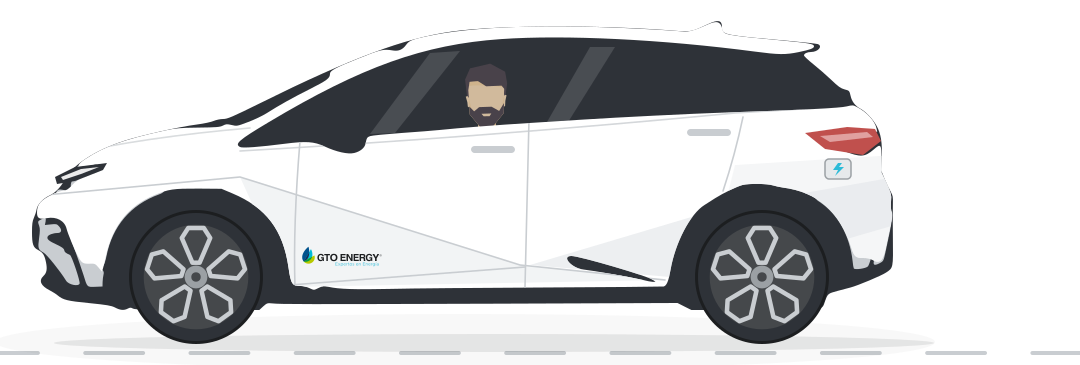

The problem
An electric vehicle does not draw power at the plant like a motor or a furnace: it requests its full power as soon as it is plugged in and sustains it for hours. If the fleet arrives at the same time and all the chargers start together, the sum shows up on your meter at once. Ten 22 kW chargers add up to 220 kW if they start together (illustrative example).
On the GDMTH tariff that sum does not stay in consumption: the demand recorded by the meter goes into the month's capacity and distribution charges. Poorly scheduled charging can set a new peak that you pay for even if it happened on a single night.
And before the bill comes the physical question: whether the transformer and the service entrance have margin for the new load. When they do not, the real project stops being the charger and becomes the substation, the load increase with CFE or a battery bank that shaves the peak.
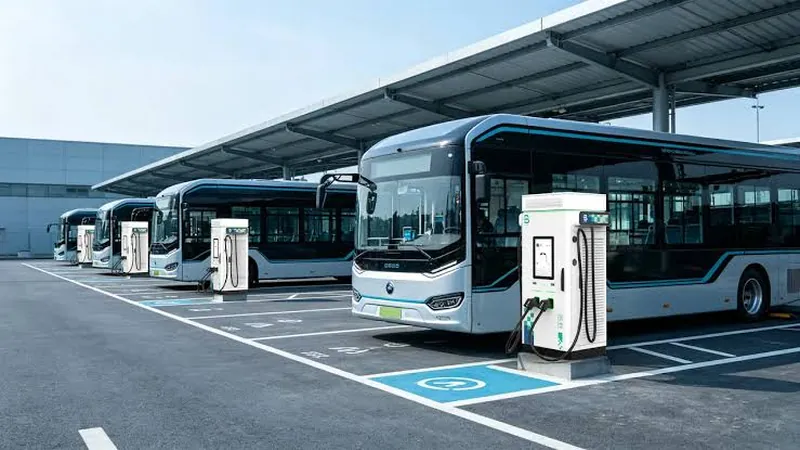
The lines in this family
The vehicle, the schedule and the charger size change. What does not change is that everything is sized against your facility's measured load curve.
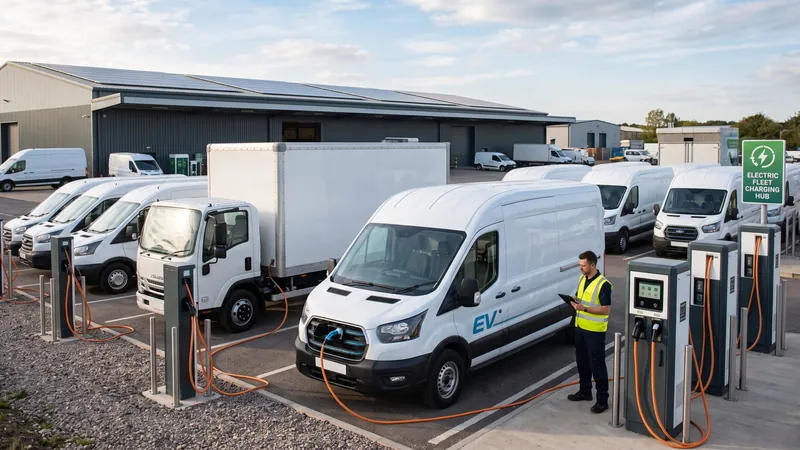
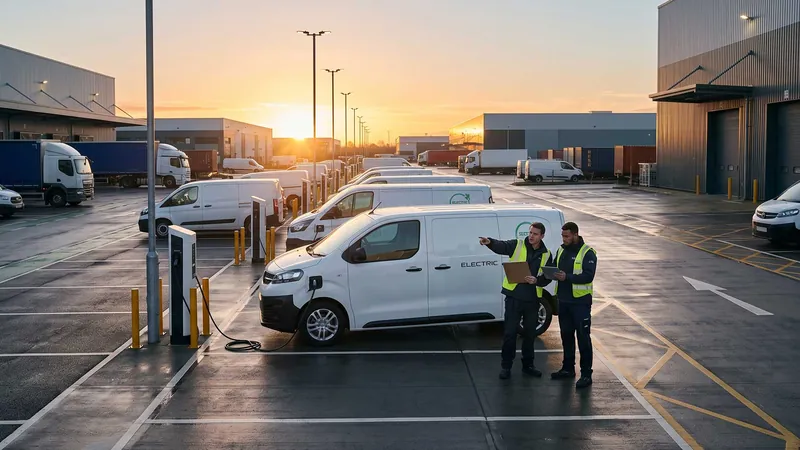
Delivery vans and utility vehicles that charge at night, staggered, without setting a new demand peak. Includes forklift charging as a separate installation.
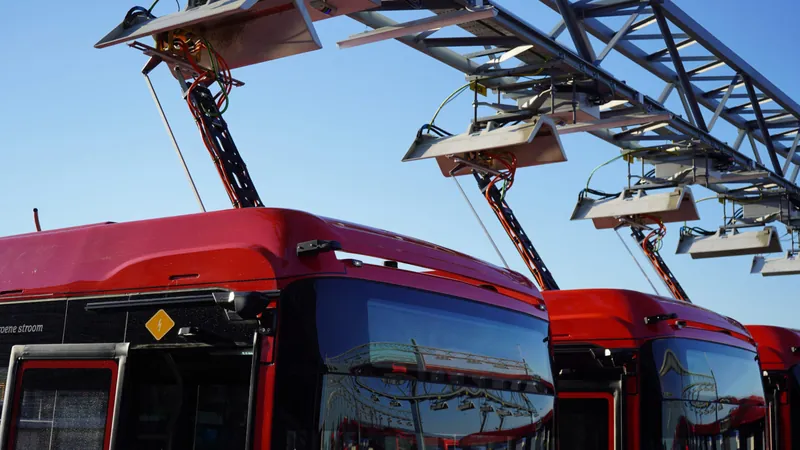
SEE THE LINE → E.2 · EMPLOYEESEmployee transport buses and employee parking, with load management and per-user metering.
SEE THE LINE → E.3 · TRUCKSDC fast charging for tractor-trailers in the yard. The real project is the medium voltage.
SEE THE LINE → E.4 · BUSINESSFor those who want to sell charging to the public: point-of-connection feasibility, sizing, billing model, permits, construction and operation.
SEE THE LINE →We do the electrical engineering, supply and installation of the charging infrastructure, and operate it after construction. We do not sell vehicles and we will not recommend a vehicle brand: we work with the fleet you have already chosen or will choose.
Signs it applies
A fleet that arrives all together at shift end needs something very different from one that charges spread throughout the day. The real arrival and departure schedule defines the power required.
It is measured, not assumed. With the plant's load curve we know how many kW are free in each hour and whether the new load fits without touching the substation.
If you are on GDMTH, vehicle charging is scheduled so it does not move the demand reading. With your bill we calculate how much a new peak would cost you.
With twelve months of billing and a metering campaign at the point of connection. If the load fits on an existing circuit with a wall charger, we tell you so and there is no project to sell.
How we work
Measured load curve, transformer and service entrance capacity, fleet schedules and expected usage. If there is no prior metering, Family A comes first.
Number and type of chargers, load management, protection per article 625 of NOM-001-SEDE-2012, electrical and civil works, and commissioning.
Load increase or new connection with the Supplier or the Distributor and, if you will sell energy, the corresponding notice to the regulator.
Monitoring of the chargers and demand, maintenance and monthly reporting under a GTO Vigía contract.
When it is not for you
If you have a few vehicles that travel a few kilometers a day and spend the night parked, a wall charger on an existing circuit may be enough. We check it and, if that is the case, we do not quote you a substation.
If your fleet is not decided yet, it is best to wait: the charger size depends on the vehicle, the route and the schedule, and infrastructure sized blindly ends up too small or oversized.
And if you are considering a public charging station without having verified the available capacity at the point of connection or the site's traffic, do not build it yet. Feasibility comes first.
How we work
Seven-day campaign with a Class A analyzer.
Engineering based on your real load curve.
Supply and installation inside your fence line.
GTO Vigía sustains the result after construction.

Energy solutions

In a short meeting we review your bill with you, on screen, and tell you what is worth measuring.
We work with plants on medium and high voltage. By sending you accept our privacy notice.
Strengths
GTO Energy offers electrical engineering tailored to your plant. Request your diagnostic and start by knowing where the opportunity is.
Seven days with a Class A analyzer at your facility, before quoting.
Engineering, supply and installation inside your fence line.
Fully creditable if you implement. No finding, no charge.
Compliance reports based on RES/550/2021, filed with the CNE and CENACE.
GTO Vigía: monitoring, monthly reporting and priority service.
We service plants installed by others, starting with a condition survey.