
BESS Storage
Storage and Backup
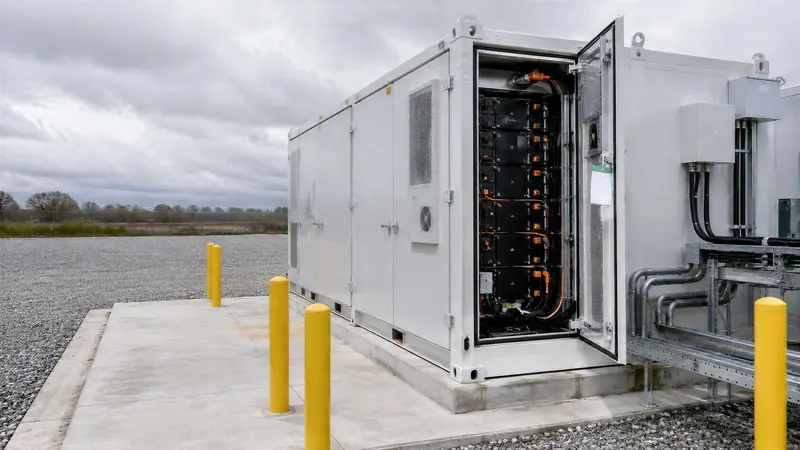
Lithium battery systems for peak shaving, time-of-use arbitrage and backup during grid outages.
The two uses
On the GDMTH tariff you pay three energy prices depending on the hour, and you also pay for the maximum demand recorded in the month. The battery charges off-peak and discharges at peak: it cuts your energy price and your billable demand peak. It does not change what your plant consumes; it changes when you are charged for it.
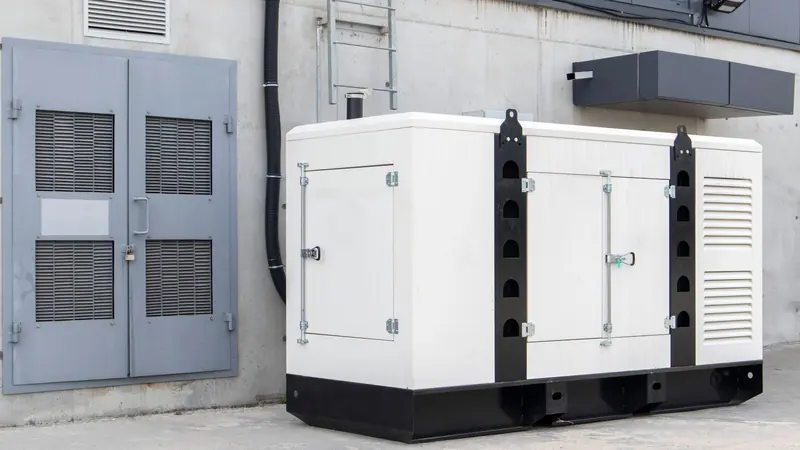
A thirty-second interruption in a continuous process costs hours of restart and sometimes lost product. The system carries the critical loads while the backup generator comes online, or covers the whole gap if the outage is short.
Peak shaving
The savings have two components that add up: the energy you stop buying at the peak price, and the kW of billable demand you no longer record. The second is usually the larger one, and it is the one almost nobody calculates correctly.
Illustrative example of a plant on GDMTH. The actual reduction depends on your measured load profile, not on a rule of thumb.
The design trade-off
And the one that provides backup needs a reserve. Sizing for both at the same time is the real work, and it is where it is decided whether the project pays for itself or not.
Every percentage point of reserve you set aside for backup is savings you stop capturing. How much to set aside is not a technical decision: it is a business decision about how much an hour of downtime costs you.
How much does an hour of unplanned downtime cost you? With that number, sizing becomes arithmetic. Without it, any backup proposal is a hunch with an invoice.
What we do
Everything starts with twelve months of real data. Without that, sizing a battery bank is guessing at list price.
12-month load profile and savings simulation for each sizing scenario.
Capacity, power, and the rules the system uses to decide when to charge and when to discharge.
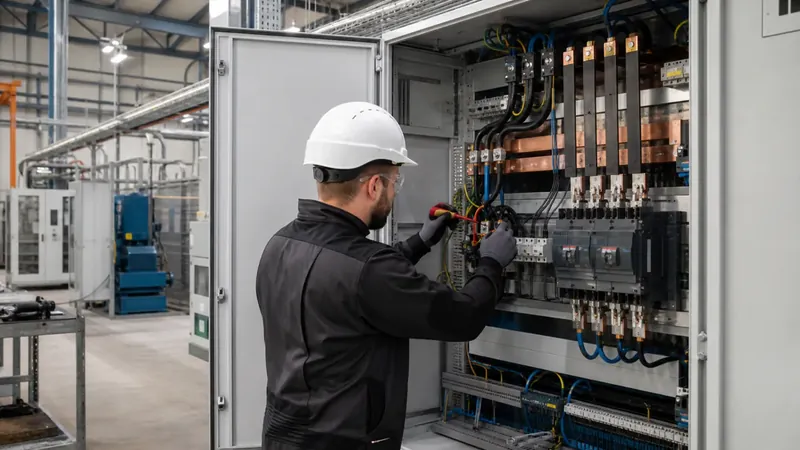
Integration, protection, electrical works and commissioning.
On an existing or new system, with the appropriate electronics and controls.
Under a GTO Vigía contract, with performance reporting against what was promised.
Questions
If your load curve is flat and shows no spikes during peak hours, storage for savings does not pay for itself. If you also have no processes that suffer from an interruption, there is no backup case either.
If you are on a low-voltage tariff with no demand charge, your money almost certainly goes further in one of the other six solutions.
How we work
Seven-day campaign with a Class A analyzer.
Engineering based on your real load curve.
Supply and installation inside your fence line.
GTO Vigía sustains the result after construction.

Energy solutions

In a short meeting we review your bill with you, on screen, and tell you what is worth measuring.
We work with plants on medium and high voltage. By sending you accept our privacy notice.
Storage is what turns midday generation into peak-hour savings.
01 · DIAGNOSTICSCorrect sizing comes from your measured load profile.
02 · COMPLIANCEThe connection studies a BESS requires are the same as those in the compliance report.
Strengths
GTO Energy offers electrical engineering tailored to your plant. Request your diagnostic and start by knowing where the opportunity is.
Fully creditable if you implement. No charge if we find no package that pays back in under 4 years.
Compliance reports based on RES/550/2021, filed with the CNE and CENACE.
We service plants installed by others, starting with a condition survey.
Partners with trademark-use authorization





Group clients since 1983





















Also: Cuadritos, Productora Nacional de Papel and Telemar.