
Automotive and auto parts
Industries
OEM assembly plants and Tier 1 suppliers in Mexico's automotive corridors. The electrical profile of an automotive plant is among the most aggressive there is, and almost no one measures it before quoting.
This sector's problem
A resistance welder draws power in millisecond pulses. When several coincide, instantaneous demand shoots far above the plant's average, and the CFE meter records that value as your demand for the month.
The same equipment injects harmonic current throughout the facility. Robots, conveyor drives and the line's switched-mode power supplies add their share. The result is the set of symptoms your maintenance staff already knows: transformers that overheat for no apparent reason, protection devices that trip with no visible fault, capacitors that degrade prematurely.
And there is a third problem that never shows up on a bill: if your process is synchronized with a customer that does not tolerate downtime, one lost production hour is worth far more than a year's energy savings.
High billable demand and, often, a power factor penalty.
Which load causes the peak, how much harmonic content is flowing and which cycle causes the trip.
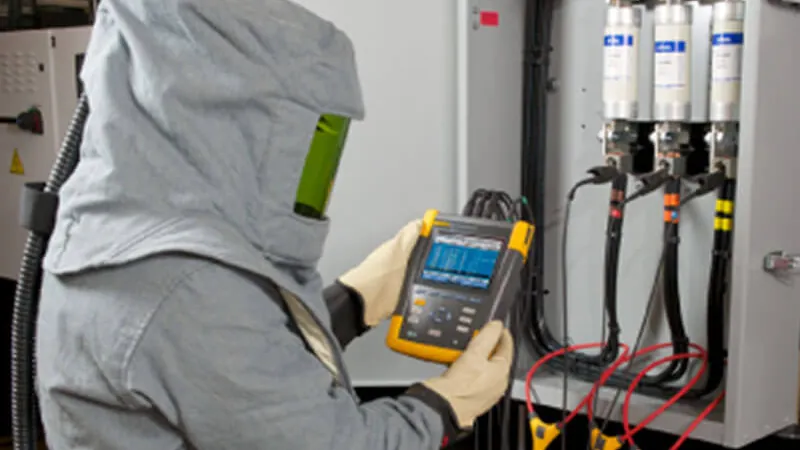
Seven-day campaign with a Class A analyzer at the service entrance and at the welding switchboards.

Signs it applies
They are pulsed and non-linear loads at the same time. The same equipment produces both the peak and the harmonics.
That is the threshold at which storage starts to pay for the engineering.
Trips with no visible fault are almost always harmonics, poorly set protection coordination, or both.
More and more corporate purchasing departments require a Grid Code (Código de Red) compliance report and a consumption report. It is cheaper to have it than to improvise it.
In an initial review, with your bill on screen, we tell you what is worth measuring and what we would expect to find.
What to do first
Measure and correct first. Power factor correction and harmonic filters have the fastest payback in the entire catalog and lower the risk of downtime at the same time.
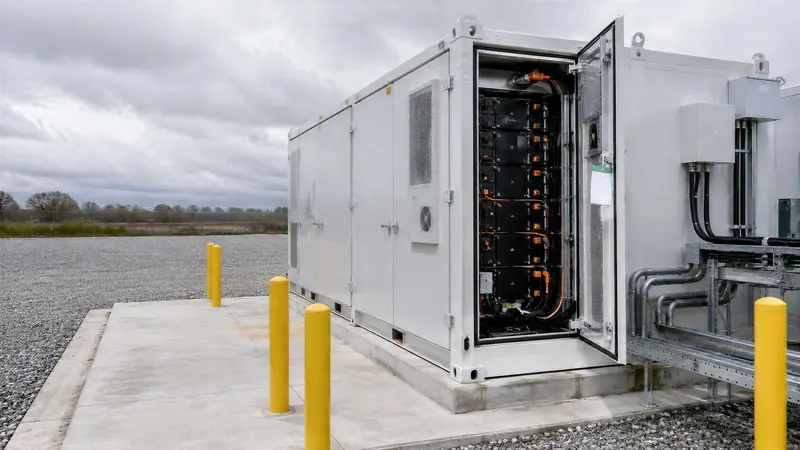
Then storage, if the demand charges justify it. A properly sized BESS shaves the welding peak and backs up the critical line with the same asset.
On-site generation comes last. Installing panels on a facility with high distortion and poorly coordinated protection means putting generation on top of a problem that has not been solved.
Frame the project in hours of downtime avoided, not pesos of energy saved. A plant director will argue about a saving; not about a production risk.
When it is not for you
If your plant does light assembly, with no welding or ovens, and your bill shows no power factor penalty, you probably do not need a full study. An initial review of your bills will confirm it.
If what you urgently need is a compliance report to hand to your customer, say so: it is a shorter, less expensive scope than an Investment-Grade Diagnostic.
How we work
Seven-day campaign with a Class A analyzer.
Engineering based on your real load curve.
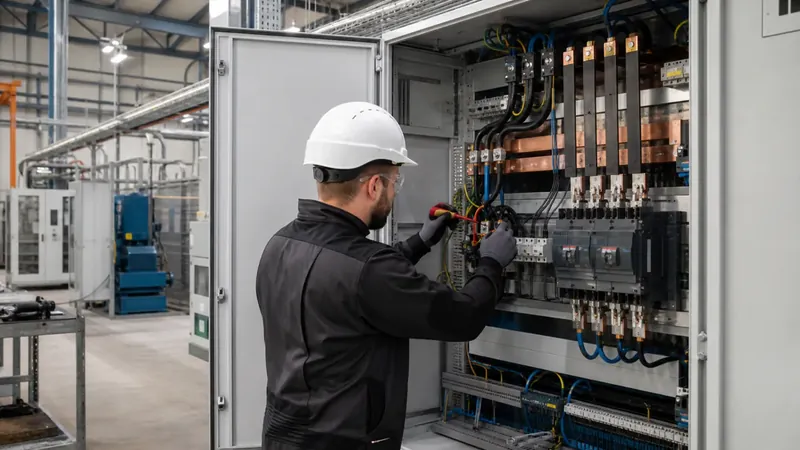
Supply and installation inside your fence line.
GTO Vigía sustains the result after construction.

Energy solutions

In a short meeting we review your bill with you, on screen, and tell you what is worth measuring.
We work with plants on medium and high voltage. By sending you accept our privacy notice.
Strengths
GTO Energy offers electrical engineering tailored to your plant. Request your diagnostic and start by knowing where the opportunity is.
Seven days with a Class A analyzer at your facility, before quoting.
Engineering, supply and installation inside your fence line.
Fully creditable if you implement. No finding, no charge.
Compliance reports based on RES/550/2021, filed with the CNE and CENACE.
GTO Vigía: monitoring, monthly reporting and priority service.
We service plants installed by others, starting with a condition survey.