

Fleet charging
E-mobility
Charging infrastructure for delivery vans and utility vehicles, sized against your plant's measured load curve and scheduled so it does not move your billable demand.
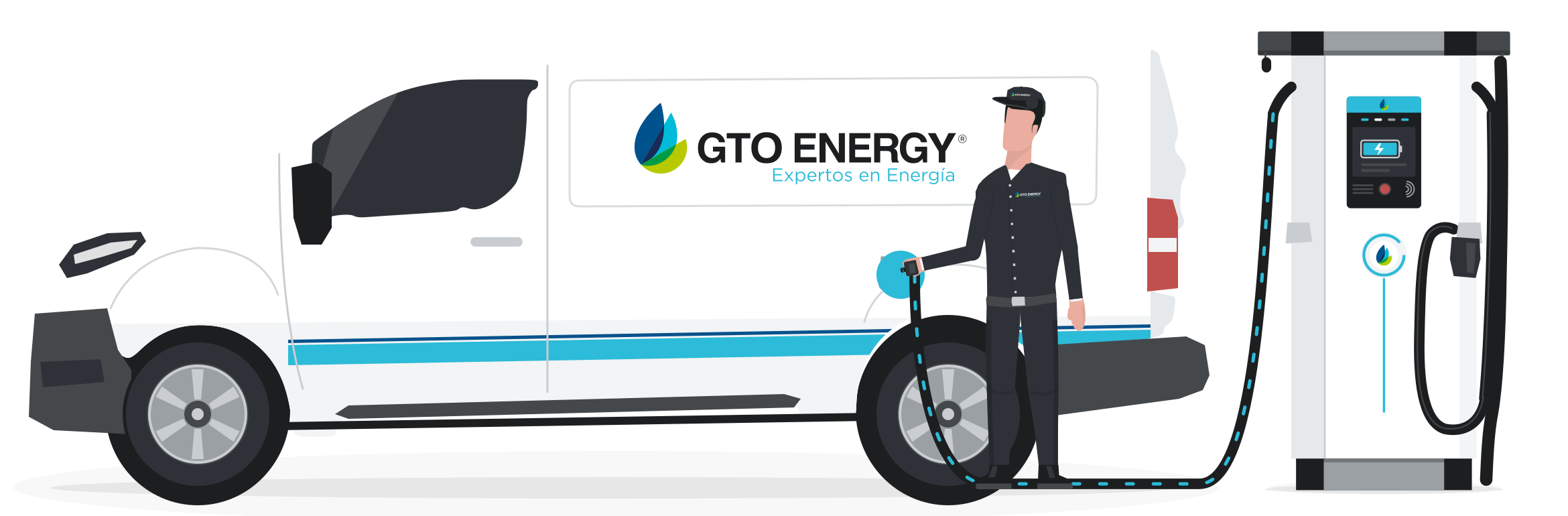
Charge management
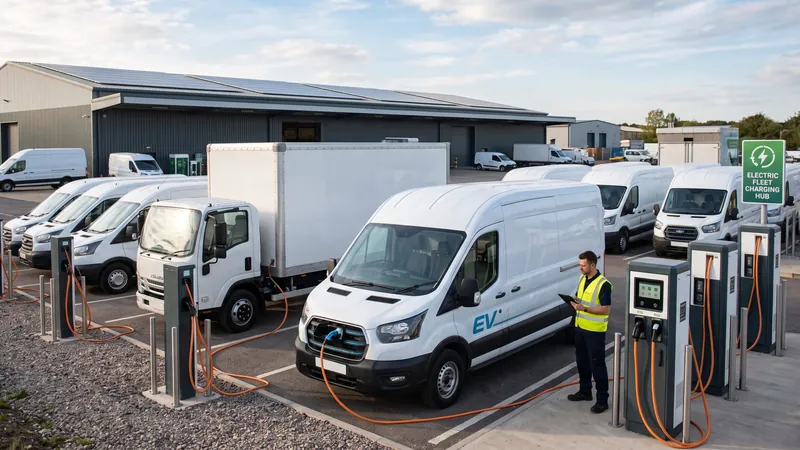
The vans come in at the end of their routes, plug in, and every charger starts at full power. The energy is the same, but demand for that hour jumps and can end up as the month's recorded peak.
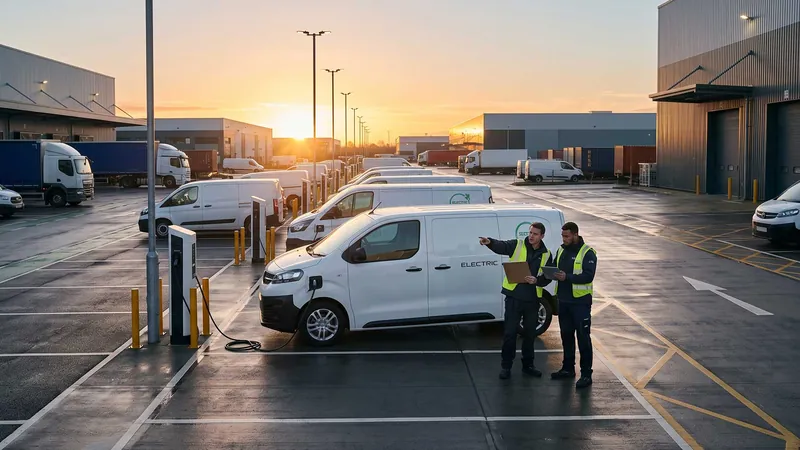
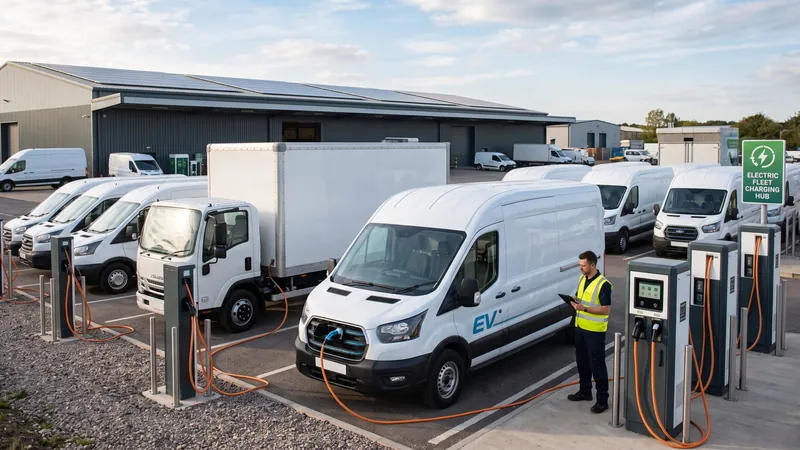
A controller shares the available power among the vehicles according to each one's departure time and state of charge. Twenty vans that arrive at 19:00 and leave at 6:00 have eleven hours to charge; they almost never all need full power at the same time (illustrative example).
On the GDMTH tariff, the demand recorded by the meter goes into the capacity and distribution charges. How much each time period weighs depends on the tariff formula, and we calculate that with your bill, not with a general rule. What is general: a load scheduled in off-peak hours and spread across the night is rarely the one that sets the peak.
The available headroom
The transformer and the service entrance have a capacity, and your plant already uses a share of it that changes hour by hour. What is free at night is usually much more than what is free at noon. That is why we measure the load curve before proposing: the real headroom is in the hours when the fleet will charge, not in the average.
If the headroom is enough, the charging goes into the existing substation with a new switchboard and its protection. If it is not, there are three options, compared with numbers: limit power through charge management, shave the peak with a battery bank, or expand the substation and file for a load increase.
Each charging circuit is protected per article 625 of NOM-001-SEDE-2012: overcurrent protection for continuous duty, no less than 125 % of the equipment's maximum load, protection of people against electric shock, and a lockable disconnecting means when the equipment exceeds 60 A or 150 V to ground.
Forklifts
Article 625 of NOM-001-SEDE-2012 excludes vehicles that do not travel on public roads, such as forklifts, cranes and front loaders. Their battery chargers are treated like any other load in the industrial installation, with their own circuit and protection.
Charger circuits and protection · charging-area conditions required by the battery technology of your equipment · how much demand they add when charged at shift change. The rule of not setting a new peak applies the same: they are scheduled too.
What we do
We start with your bill, metering at the point of connection and the route log: what time each vehicle arrives and what time it leaves.
Transformer and service entrance headroom during charging hours, and the effect on your billable demand.
Number and power of chargers, switchboards, protection per article 625, and charge management strategy.
Chargers, conduit, civil and electrical works, and commissioning.
Substation, load increase with CFE or a battery for peak shaving, compared by scenario.
Under a GTO Vigía contract, with reporting on energy charged and demand.
Questions
When it is not for you
If you have a few vehicles that cover few kilometers a day and are parked overnight, a wall charger on an existing circuit may be enough. We check the circuit and the panel, and if it is enough, the project ends there.
If your plant is not on a tariff with a demand charge, charge management loses much of its economic case. It still helps you stay within the transformer capacity, but not with the bill.
And if you do not yet know which vehicle you will buy or how many, wait until it is clear: sizing the infrastructure before the fleet is the most common way to overpay.
How we work
Seven-day campaign with a Class A analyzer.
Engineering based on your real load curve.
Supply and installation inside your fence line.
GTO Vigía sustains the result after construction.

Energy solutions

In a short meeting we review your bill with you, on screen, and tell you what is worth measuring.
We work with plants on medium and high voltage. By sending you accept our privacy notice.
Strengths
GTO Energy offers electrical engineering tailored to your plant. Request your diagnostic and start by knowing where the opportunity is.
Seven days with a Class A analyzer at your facility, before quoting.
Engineering, supply and installation inside your fence line.
Fully creditable if you implement. No finding, no charge.
Compliance reports based on RES/550/2021, filed with the CNE and CENACE.
GTO Vigía: monitoring, monthly reporting and priority service.
We service plants installed by others, starting with a condition survey.