

Employee mobility at the plant
E-mobility
Charging infrastructure for employee transport and for your employees' vehicles, with charge management that respects the plant's demand and metering that shows who used what.

The two cases
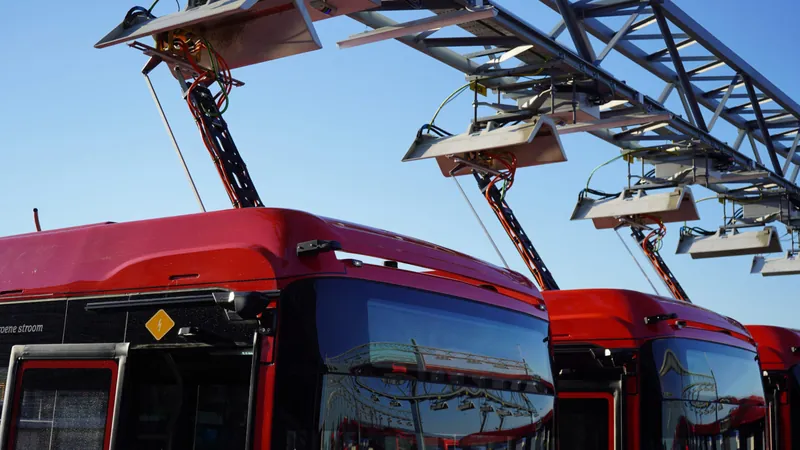
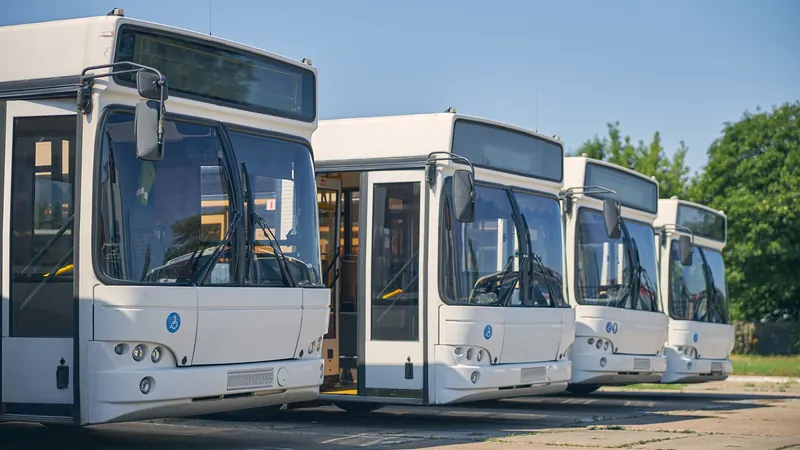
Employee transport runs on known schedules: it arrives with one shift and leaves with the next. That window defines the power per bus. If the window is short, charging is DC; if the bus spends the night in the yard, slower charging may be enough.
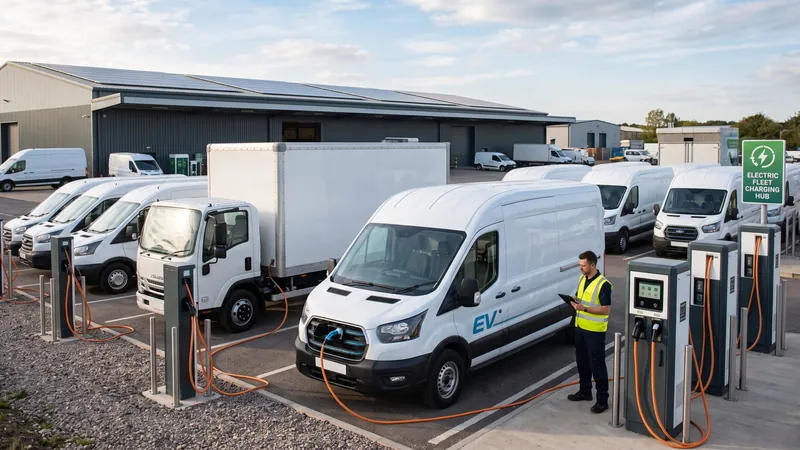
Vehicles arrive at the start of the shift and stay plugged in for the whole shift. Power per charger can be low if charge management shares what is available among all of them. The challenge is not power: it is metering, billing or allocating, and maintaining many charging points.
If the buses charge when the plant is at its production peak, vehicle charging adds to the process load. The measured curve decides what charges when, and whether one must be limited so the other does not set the month's demand.
Charging between shifts
A bus that finishes its route at 7:00 and leaves at 14:30 has seven and a half hours to charge; one that leaves again in two hours has two (illustrative example). Charger power is calculated from that window and the energy the route consumes, not the other way around.
When several buses share the window, charge management serves them by departure priority. That keeps the total power the yard draws below what the transformer can deliver at that hour, and below the demand record you do not want to move.
Each circuit is protected per article 625 of NOM-001-SEDE-2012: overcurrent protection for continuous duty no less than 125 % of the equipment's maximum load, protection of people against electric shock, and a lockable disconnecting means when the equipment exceeds 60 A or 150 V to ground.
Per-user metering
A smart charger identifies the user, logs the energy of each session and communicates with a central system over open protocols. With that, you decide the policy: free charging as a benefit, payroll deduction or a charge per kWh. The decision belongs to HR; the metering that makes it possible is ours.
If the parking lot belongs to the company and charging is offered to employees, how you charge for it, or do not, has tax and labor implications worth reviewing with your legal department. We deliver the per-user energy log.
What we do
We start with the shift schedules, the distance of each route and the plant's measured load curve.
Transformer headroom during the charging hours of the yard and the parking lot.
Chargers for buses and for employees, priority-based charge management and protection per article 625.
User identification, per-session energy logging and reporting for your internal policy.
Chargers, switchboards, conduit, civil and electrical works, and commissioning.
Under a GTO Vigía contract: charger availability, fault response and monthly reporting.
Questions
When it is not for you
If your parking lot has few electric vehicles and they stay plugged in for the whole shift, a couple of wall chargers on an existing circuit may be enough. You do not need a management system for that.
If the transport company has not yet confirmed it will use electric buses on its routes, it is not worth building the charging yard. First the route and the vehicle; then the infrastructure.
And if you do not plan to meter or allocate the energy, think twice about offering charging to employees: without metering, the cost ends up on the plant's bill without anyone seeing it.
How we work
Seven-day campaign with a Class A analyzer.
Engineering based on your real load curve.
Supply and installation inside your fence line.
GTO Vigía sustains the result after construction.

Energy solutions

In a short meeting we review your bill with you, on screen, and tell you what is worth measuring.
We work with plants on medium and high voltage. By sending you accept our privacy notice.
Strengths
GTO Energy offers electrical engineering tailored to your plant. Request your diagnostic and start by knowing where the opportunity is.
Fully creditable if you implement. No charge if we find no package that pays back in under 4 years.
Compliance reports based on RES/550/2021, filed with the CNE and CENACE.
We service plants installed by others, starting with a condition survey.
Partners with trademark-use authorization





Group clients since 1983





















Also: Cuadritos, Productora Nacional de Papel and Telemar.