

Family B
Storage and Backup
Solutions
Behind-the-meter storage to manage the demand charge, keep your process running and defer a service upgrade that CFE will not deliver in time.
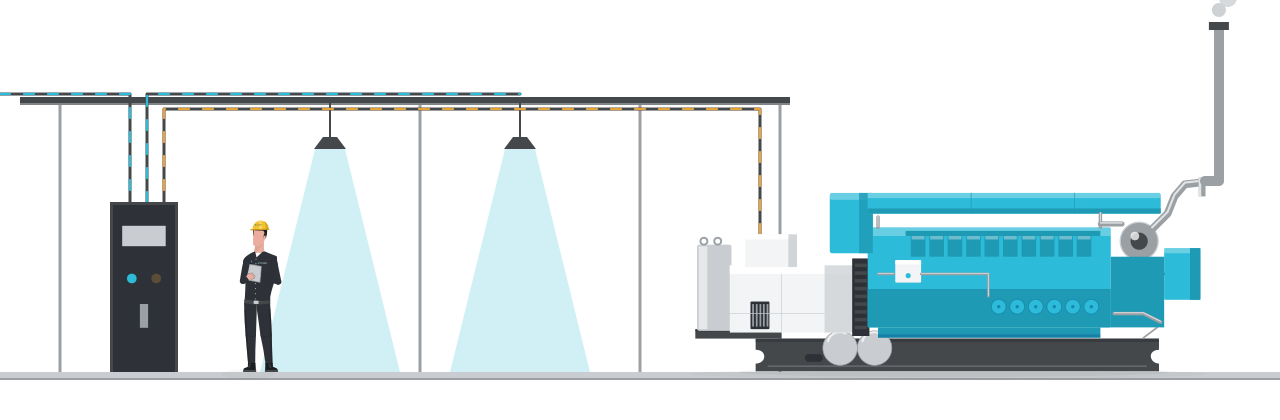
The problem
On the GDMTH tariff you pay three different prices depending on the hour, and you also pay for the maximum demand recorded in the month. A simultaneous fifteen-minute start-up sets the charge for all thirty days. It is not consumption: it is the peak.
And there is a second cost that does not appear on the bill. When the grid in your area is saturated and CFE cannot upgrade your service entrance in the time your production needs, new capacity cannot be bought: you wait. In the León industrial corridor that wait is measured in years.
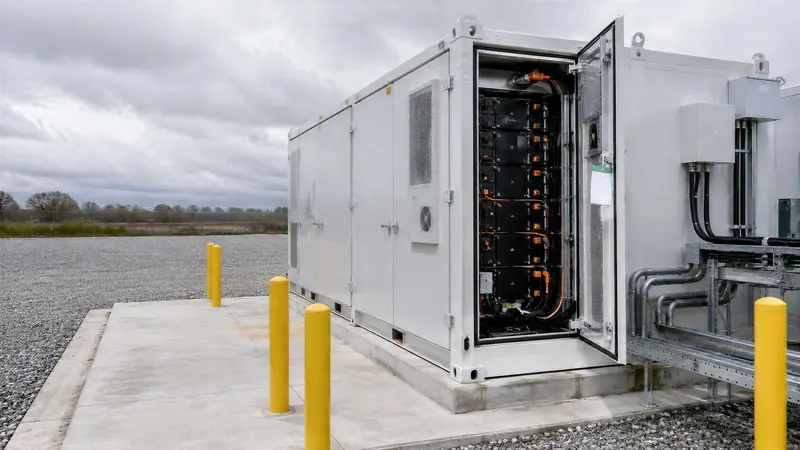
Storage solves both with the same asset: it shaves the billable peak by charging during off-peak and discharging during peak, and it keeps the process running when the grid fails or when new load exceeds what is contracted.
The lines in this family
It is not an add-on to solar. It is the asset that decides whether your bill goes down and whether your process stops.
Peak shaving, backup during grid failures, deferral of service upgrades, and hybridization with existing or new solar generation.
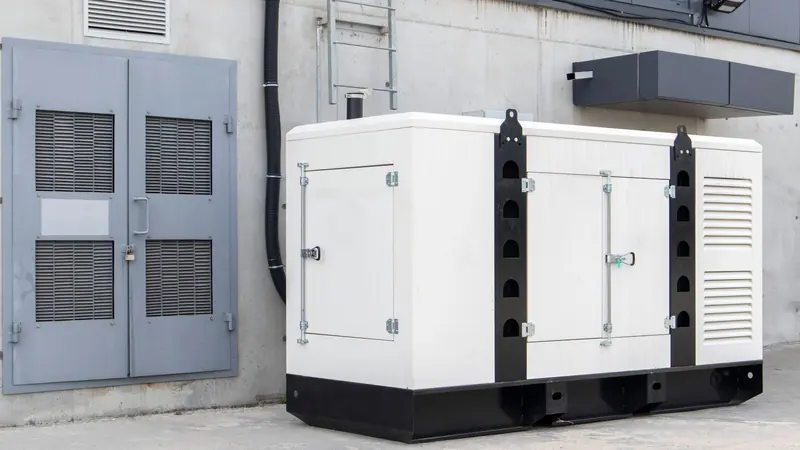
SEE THE LINE → B.2 · BACKUPFuel-based backup for critical loads and for compliance with article 32 of the Electricity Sector Law.
SEE THE LINE →A battery bank for savings and a bank for backup are not the same equipment or the same operating strategy. Sizing for both at once depends on your measured load profile — not on a rule of thumb applied to your annual consumption.
B.2 · Backup generators
A battery bank provides good backup for minutes and hours. When the critical load has to be sustained through a long outage, or when backup is an obligation and not a cost decision, the right equipment is a backup generator.
It is sized on the real critical load, not on the plant's total demand. That distinction is the difference between equipment that pays for itself and one that starts once a month for nothing.
The answer is often a combination: a battery for the billable peak and for uninterrupted transfer, a generator for the prolonged outage. They are evaluated together.
Which loads are critical and which are not · how long the backup has to last · whether the transfer can tolerate a gap or has to be uninterrupted · whether the backup responds to an obligation under article 32 of the Electricity Sector Law or to your own continuity decision.
Signs it applies
Add capacity plus distribution and divide by the total. Without this number there is no case for storage, no matter how much the plant consumes.
This is the minimum size for the project to pay for its own engineering. Below that, the payback stretches beyond what a committee approves.
If your process does not tolerate interruptions and you know what an hour of downtime costs you, backup stops being an expense and becomes a comparison of numbers.
With twelve months of billing we calculate all three. If demand charges do not reach 25%, we tell you storage is not your next step and tell you which one is.
How we work
Twelve months of billing and the measured load profile. If there is no prior metering, Family A comes first.
Sizing, operating strategy and payback by scenario. Supply, civil and electrical works, integration and commissioning.
Interconnection, registration of the storage system and whatever the applicable regulation requires based on capacity and scheme.
Online monitoring and monthly reporting under a reliability contract. A battery without monitoring loses its business case the first month it operates poorly and nobody notices.
When it is not for you
If your load is flat twenty-four hours a day and demand charges are a minor fraction of your bill, storage has nowhere to get savings from. We will not quote it for you.
If your consumption is well below 150,000 kWh a month, the cost of engineering and interconnection is not spread over enough kilowatt-hours. In that range it is better to adjust contracted demand and correct the power factor first.
And if what you need is pure backup for a small critical load, a backup generator costs a fraction of a BESS. We ask what it is for before sizing.
How we work
Seven-day campaign with a Class A analyzer.
Engineering based on your real load curve.
Supply and installation inside your fence line.
GTO Vigía sustains the result after construction.

Energy solutions

In a short meeting we review your bill with you, on screen, and tell you what is worth measuring.
We work with plants on medium and high voltage. By sending you accept our privacy notice.
Strengths
GTO Energy offers electrical engineering tailored to your plant. Request your diagnostic and start by knowing where the opportunity is.
Fully creditable if you implement. No charge if we find no package that pays back in under 4 years.
Compliance reports based on RES/550/2021, filed with the CNE and CENACE.
We service plants installed by others, starting with a condition survey.
Partners with trademark-use authorization





Group clients since 1983





















Also: Cuadritos, Productora Nacional de Papel and Telemar.