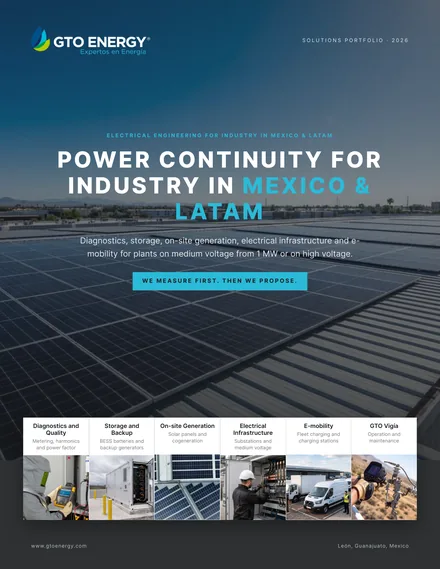

Metalworking
Industries
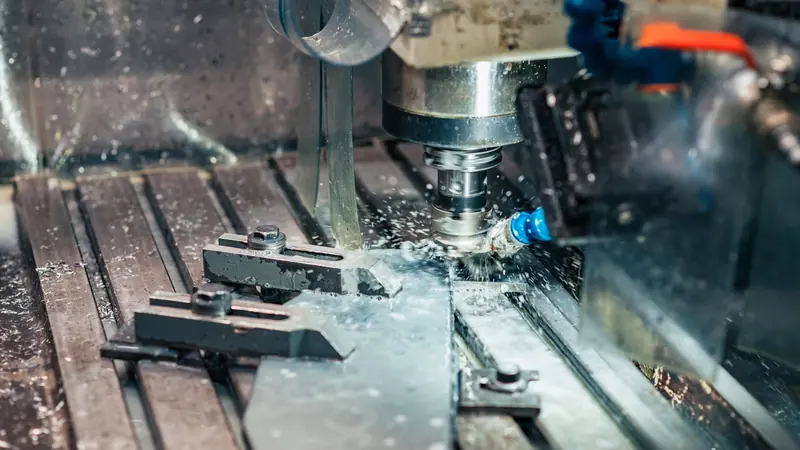
Foundry, heat treatment, machining and structural work. Large, intermittent and electrically hostile loads, in facilities that often grew piece by piece.
This sector's problem
It is the pattern in this sector. A substation was installed fifteen years ago, three expansions were hung off it as work came in, and today there is no drawing that reflects what is energized. As long as nothing fails, the problem is invisible.
On top of that, the induction furnace is one of the most aggressive loads in industry: severe harmonic distortion, high reactive power and strong variation depending on the melting stage. Cranes and compressors add starting peaks that set the month's demand.
The practical consequence is that the protection coordination no longer matches the real installation. When a fault occurs, the nearest device does not trip: the whole plant goes down, and no one can explain why.
What is installed, with what capacity and connected to what. Delivered with drawings and design calculations.
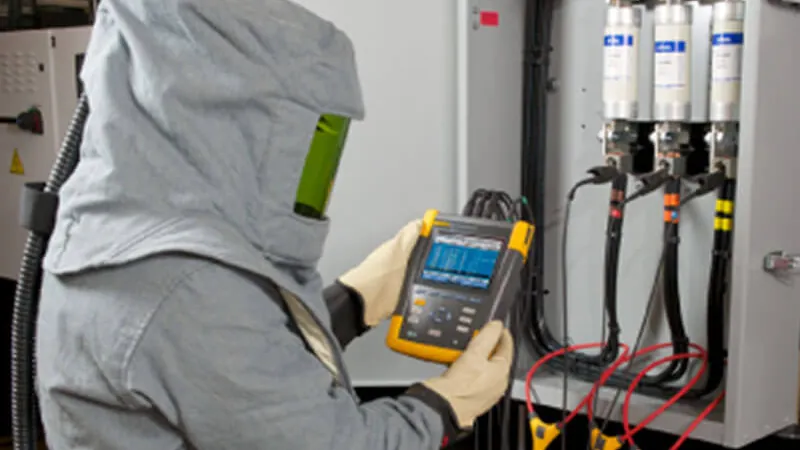
Harmonic spectrum by order, power factor by interval and demand profile with its starts.
Protection settings readjusted to the real installation, so a fault does not bring everything down.
Signs it applies
On its own it justifies a harmonics and resonance study. There is no case where it does not apply.
It is the starting point for almost everything else, and it is quoted separately: it is useful to you even if someone else does the work.
You are already overpaying and are probably already at the thermal limit of your installation.
That is protection coordination. It gets recalculated, and it is one of the cheapest jobs with the greatest effect.
In an initial review, with your bill on screen, we tell you what is worth measuring and what we would expect to find.
What to do first
The site survey first. Without knowing what is installed, any proposal is an estimate on letterhead.
Then metering and correction: harmonic spectrum, power factor and protection coordination. All three have a short payback and lower the risk of downtime.
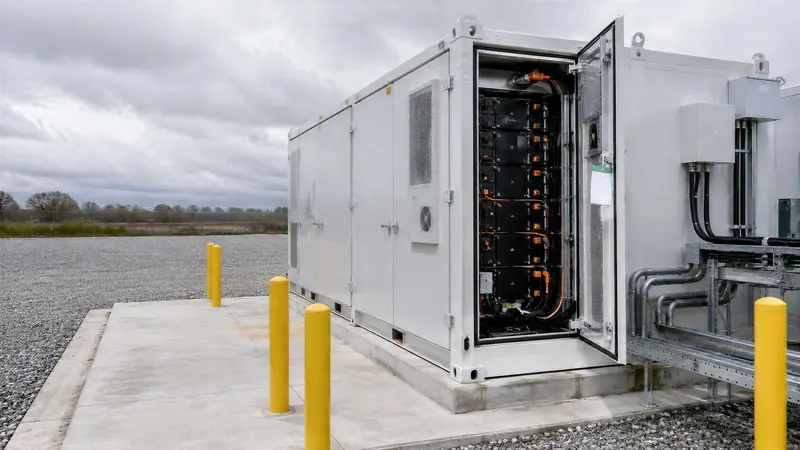
Infrastructure last, and only what is needed: a contracted demand adjustment if there is spare capacity, a load increase if there is not enough, and storage if the peak justifies it and CFE cannot expand your service in time.
If your process cannot be stopped for maintenance, some medium-voltage work can be done live. It is a specific capability and it has to be planned, not improvised.
When it is not for you
If your shop is on low voltage, with no furnaces and a modest contracted demand, the full study is not justified. We review your bills and tell you so.
If you already know you need a new substation, let us first verify whether your measured demand really requires it. Often a contracted demand adjustment and power factor correction free up capacity without construction.
How we work
Seven-day campaign with a Class A analyzer.
Engineering based on your real load curve.
Supply and installation inside your fence line.
GTO Vigía sustains the result after construction.

Energy solutions

In a short meeting we review your bill with you, on screen, and tell you what is worth measuring.
We work with plants on medium and high voltage. By sending you accept our privacy notice.
Strengths
GTO Energy offers electrical engineering tailored to your plant. Request your diagnostic and start by knowing where the opportunity is.
Seven days with a Class A analyzer at your facility, before quoting.
Engineering, supply and installation inside your fence line.
Fully creditable if you implement. No finding, no charge.
Compliance reports based on RES/550/2021, filed with the CNE and CENACE.
GTO Vigía: monitoring, monthly reporting and priority service.
We service plants installed by others, starting with a condition survey.