GTO Energy · Energy Experts Contact
Metering room with several electricity meters mounted on a wall.

Grid Code

Compliance report

Who it applies to
Load centers on medium and high voltage
Legal basis
RES/550/2021 · Electricity Sector Law (Ley del Sector Eléctrico)
Authority
National Energy Commission (Comisión Nacional de Energía) · CENACE
Deliverable and timeline
Report and work plan · 4 to 10 weeks

Your bill is not enough

Why doesn't the average prove you comply?

The CFE bill shows an average power factor for the period. The Grid Code (Código de Red) is verified on short-interval measurements, and you comply when the value holds for almost the whole month.

A plant with a good average and motor starts that knock it down every shift can be outside the criterion without the bill hinting at it. The only way to know is to measure.
1.000.900.80 POWER FACTOR Monthly average · what the bill shows ● Intervals that drop · what the standard evaluates day 1day 15day 30
Illustrative. The required value and percentage of time will be published once confirmed against the load-center connection regulatory manual (Manual Regulatorio de Conexión de Centros de Carga).
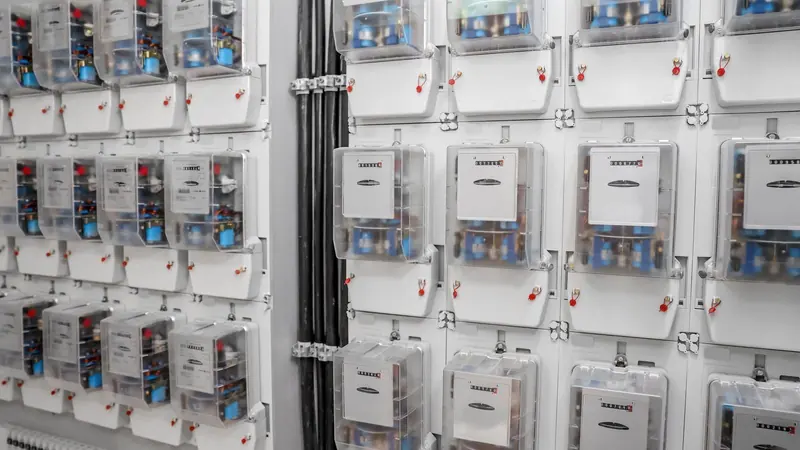
Energy meters at the point of connection.
Point of connection
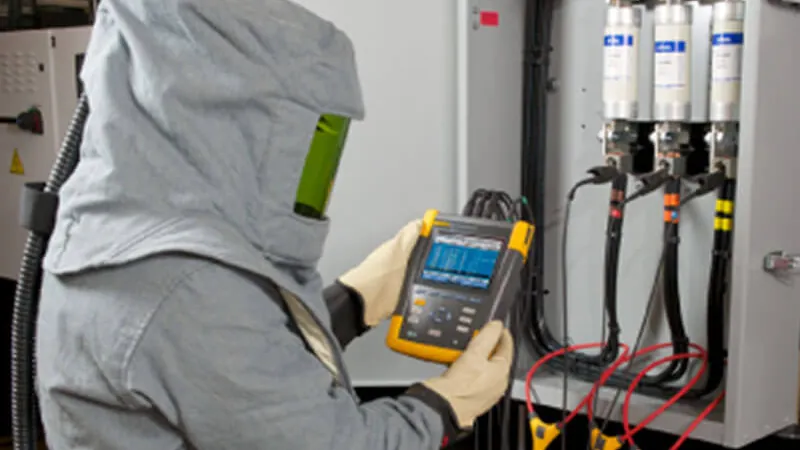
Measurement with a clamp meter at a switchboard.
Metering at switchboards
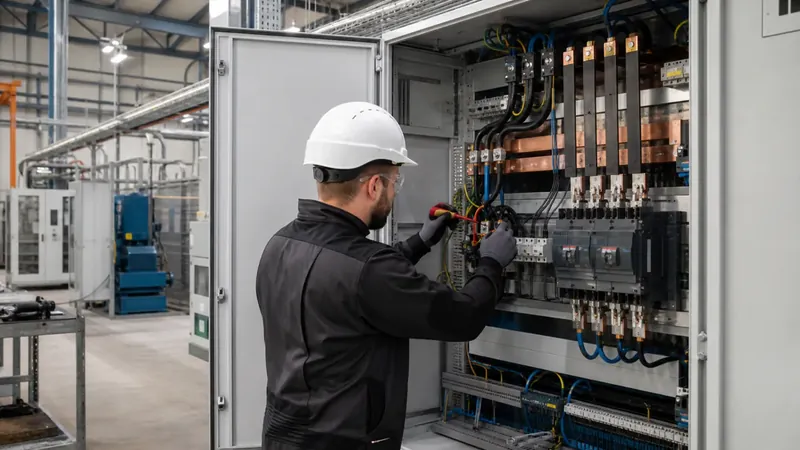
Engineer taking readings in a switchboard room.
Protection and switchgear
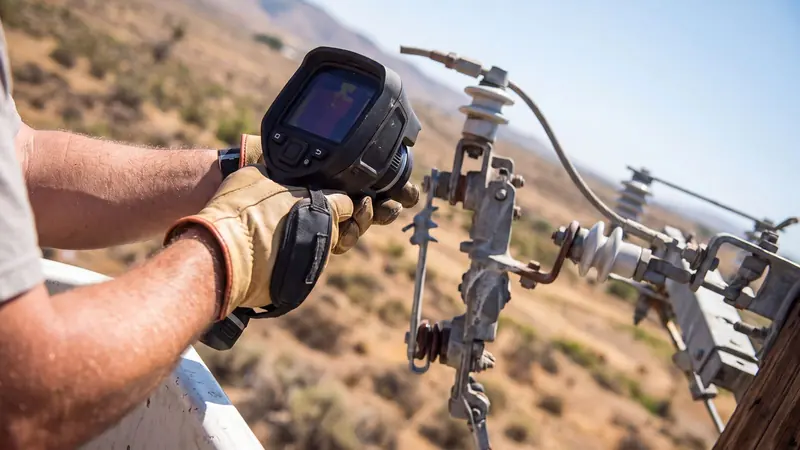
Thermography of connections on a line.
Thermography of connections

Who it applies to

Does the Grid Code apply to me?

It applies to load centers connected at medium and high voltage, regardless of their supply scheme or contracted demand. If your plant is on GDMTH or DIT, it is covered.

If your service is low voltage — PDBT or GDBT — it does not apply to you, and you have no reason to pay for a compliance report.

Medium and high voltageGDMTO · GDMTH · DIST · DITIt applies
Low voltagePDBT · GDBTIt does not apply

Current framework: RES/550/2021 (DOF, Dec 31, 2021), which updated the 2016 provisions. Today it is overseen by the National Energy Commission; connection studies are defined by CENACE.

The eight parameters

What is evaluated during the study?

The quickest test of whether whoever quotes you knows what they are talking about: most proposals cover three or four.

01

Voltage

Levels and regulation at the point of connection.

02

Voltage transients

Sags and overvoltages that affect process control.

03

Frequency

Response of the installation to system deviations.

04

Short circuit

Fault currents and interrupting capacity of the equipment.

05

Protection coordination

That the breaker that should trip does, and not the one upstream.

06

Power factor

Measured and corrected at the point of connection, not estimated from the bill.

07

Power quality

Current and voltage harmonic distortion within limits.

08

Information exchange

Signals and communication with the system operator.

What we deliver

Six studies, one compliance report and one work plan

Each study uses the result of the previous one: without an up-to-date single-line diagram there is no reliable short-circuit study, and without short circuit there is no protection coordination worth anything.

Chain of studiesEach one feeds the next
Single-linediagrams Short circuit Protectioncoordination Arc-flash Load flow Powerquality COMPLIANCE report WORKPLAN CORE CHAINCOMPLEMENTARY

The work plan only appears when the compliance report finds non-compliance: it is the document you use to get up to date, with works, deadlines and responsible parties.

When you will be asked for it

Non-compliance shows up at the worst moment

Load increase

The application stalls until the technical criteria are proven.

Interconnection

Solar, cogeneration or batteries start from the same things the compliance report reviews.

Inspection

The Law provides for penalties for failing to meet connection obligations.

Questions

What clients ask before hiring us
How long does it take?
Between 4 and 10 weeks depending on the size of the installation and the number of substations. The on-site survey takes one to three days and does not require stopping operations: measurements are taken with the equipment under load.
What happens if the compliance report finds non-compliance?
That is the normal case, not the exception. It produces the work plan: the works needed, their cost and a schedule. We can carry it out, but the plan is yours and you can put it out to bid with whoever you want.
I already have a compliance report from years ago. Is it still valid?
It depends on whether your installation has changed since then and on which regulation it was based. Many reports in circulation rely on the 2016 provisions. In an initial review we look at yours and tell you whether it has to be redone or only updated.
Do I need permanent monitoring?
For the compliance report, not always. For information exchange with the system operator, and to sustain compliance over time, it is advisable. We present it to you as a separate decision, with its cost.

Download Brochure

Energy solutions

Download here

Would you like Grid Code advisory?

In a short meeting we review your bill with you, on screen, and tell you whether it applies and how far you are from complying.

We work with plants on medium and high voltage. By sending you accept our privacy notice.

Continue with

Related services

Strengths

What backs every project

GTO Energy offers electrical engineering tailored to your plant. Request your diagnostic and start by knowing where the opportunity is.

01

We measure before we propose

Seven days with a Class A analyzer at your facility, before quoting.

02

One accountable partner

Engineering, supply and installation inside your fence line.

03

Diagnostic with no down payment

Fully creditable if you implement. No finding, no charge.

04

Current regulation

Compliance reports based on RES/550/2021, filed with the CNE and CENACE.

05

Operation and maintenance

GTO Vigía: monitoring, monthly reporting and priority service.

06

Third-party systems

We service plants installed by others, starting with a condition survey.