

Distributed cogeneration
On-site Generation
Gas-engine cogeneration under a distributed generation scheme, for plants with continuous thermal demand.
Who signs the engineering
Cogeneration fails when someone sells it as if it were a single trade. The thermal side and the electrical side are designed with different criteria, and the point where they meet is where the return is lost or won.
Heat balance, heat recovery from engine jackets and exhaust gases, integration with your steam or hot-water circuit, and the absorption chiller where applicable. Signed by specialized thermal engineering: steam systems, heat exchange and recovery, with process criteria rather than catalog criteria.
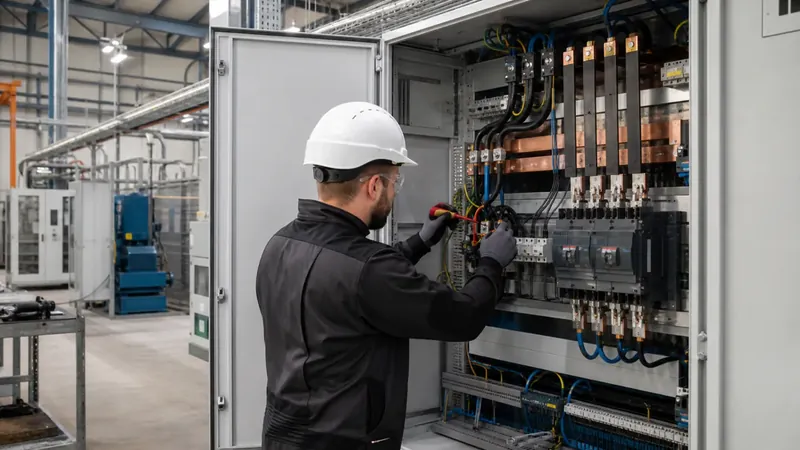
Interconnection under distributed generation, protection coordination, grid synchronization, switchboard, and integration with your existing installation, which we measure ourselves.
It is selected after the heat balance and quoted directly with the manufacturer. We do not claim a dealership we do not have, and we present the alternatives evaluated with their numbers.
One table, one proposal and one party accountable for the result. It is not your job to coordinate three suppliers to find out whether the project exists.
What it is
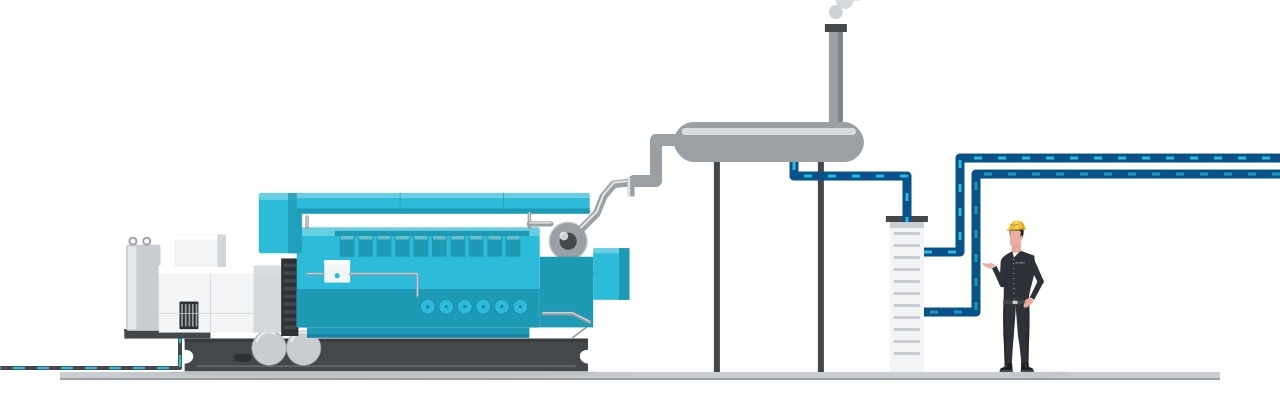
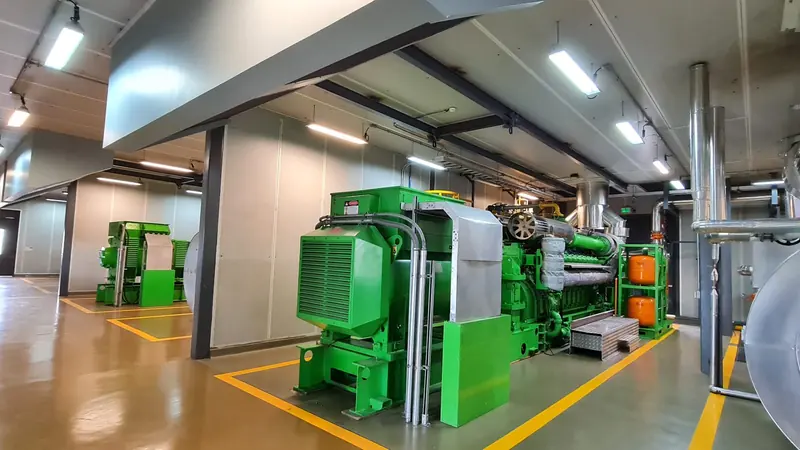
Cogeneration is the simultaneous generation of electricity and useful heat from a single input of primary energy. A gas engine drives an electric generator, and the heat that would normally be thrown away is recovered and used.
Two usable heat sources: the engine cooling circuit, between 70 and 90 °C, and the exhaust gases, between 400 and 500 °C. With them you produce hot water, steam or —through an absorption chiller— chilled water.
Where the savings come from
Buying electricity from the grid and producing heat in a boiler are two separate processes, each with its own losses. Cogeneration combines them and uses what the first one wastes.
The assumptions are shown on purpose. The real savings at your plant depend on how much of the recovered heat you can actually use: if you use only half, the number drops by half. That is calculated with your heat balance, not with a table.
Cogeneration does not pay for itself with the electricity it generates: it pays for itself with the heat you actually manage to use. A plant that recovers 90% of the heat has an excellent project; the same machine at a plant that uses 30% is a bad business with good engineering.
Who it is for
Food and beverage, tanning, dairy, textiles, chemicals, hospitals and hotels. If your boiler runs more than 6,000 hours a year, cogeneration deserves at least a prefeasibility study.
If your plant has no continuous thermal demand, cogeneration is not for you, and we will tell you so at the first meeting. Selling a generator set to someone who cannot use its heat is the fastest way to turn good equipment into a bad project.
Why distributed generation
Many companies do not want the timelines or the administrative burden of a self-supply permit. A project sized within the distributed generation limit is interconnected under a much simpler scheme.
That is GTO Energy's scope. For larger projects, which do require a permit or market participation, development is handled by GIS Power, a company in the same group. It is a regulatory boundary, not a capacity one.
Based on your actual electrical and thermal consumption: how much machine fits, how much heat is used and what return results.
Equipment selection and heat-recovery architecture — what is done with the 90 °C circuit and what with the 500 °C gases.
Mechanical, electrical and interconnection works, through commissioning.
A generator set is a machine that lives on maintenance. It is contracted from the start, not afterward.
Questions
The generator set is selected after the heat balance, not before. We quote directly with manufacturers and present the alternatives evaluated with their numbers, instead of pushing whichever brand suits us to sell.
How we work
Seven-day campaign with a Class A analyzer.
Engineering based on your real load curve.
Supply and installation inside your fence line.
GTO Vigía sustains the result after construction.

Energy solutions

In a short meeting we review your bill with you, on screen, and tell you what is worth measuring.
We work with plants on medium and high voltage. By sending you accept our privacy notice.
Strengths
GTO Energy offers electrical engineering tailored to your plant. Request your diagnostic and start by knowing where the opportunity is.
Fully creditable if you implement. No charge if we find no package that pays back in under 4 years.
Compliance reports based on RES/550/2021, filed with the CNE and CENACE.
We service plants installed by others, starting with a condition survey.
Partners with trademark-use authorization





Group clients since 1983





















Also: Cuadritos, Productora Nacional de Papel and Telemar.