

The three generation categories
Article 17 is the entry point: generation may be carried out through three categories — Distributed Generation, Self-supply, and Generation for the Wholesale Electricity Market.
And article 19 sets the number that separates them: all power plants with a capacity of 0.7 MW or more must hold a generation permit; those with lower capacity are Exempt Generators and do not require a permit.
With those two articles you can already place any project. What follows is what each category allows.
Distributed Generation · under 0.7 MW
Article 25 defines it: generation at power plants with a capacity below 0.7 MW, interconnected to a distribution circuit with a high concentration of load centers. And it is an Exempt Generator, meaning no generation permit.
The energy and associated products may be used for own consumption or sold, under the terms of the Law. And article 24 limits who to: Exempt Generators may only sell through a Supplier, or dedicate their output to own consumption.
They may also sell through a Qualified Services Supplier, under one specific technical condition: that the plant does not share its metering with the load center of a basic-supply user. That detail is resolved in the metering design, not at the end.
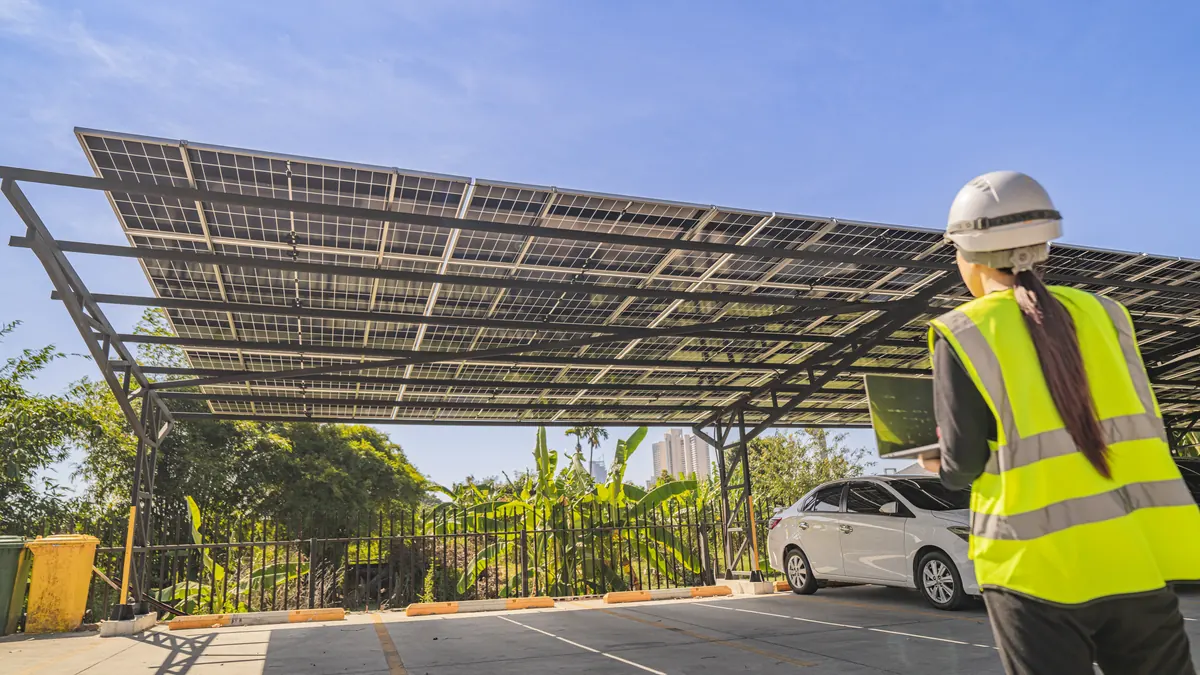
This is the bracket where most commercial and industrial solar systems fall, and it is our ground.
| Category | Capacity | Permit required? | Who it can sell to | Article |
|---|---|---|---|---|
| Distributed Generation | Under 0.7 MW | No: Exempt Generator | Through a Supplier, or own consumption. Through a Qualified Services Supplier if it does not share metering with a basic-supply user | 25 · sale: 24 |
| Self-supply | 0.7 MW or more | Yes; simplified procedure possible from 0.7 to 20 MW interconnected | Own on-site needs; the shortfall is bought from the grid | 30 · modes: 31 and 32 |
| Generation for the market | 0.7 MW or more | Yes | Wholesale Electricity Market | 35 |
| Emergency backup | Any capacity | No | Does not sell: exclusively own use in emergencies | 19, last paragraph |
Self-supply · from 0.7 MW
Article 30 defines it as the output of a power plant with a capacity of 0.7 MW or more intended to meet the own on-site needs of the holder of the current generation permit.
And it carries a fact that changes schedules and rarely appears in a proposal: interconnected self-supply at plants of between 0.7 and 20 MW may qualify for a simplified procedure to obtain the permit, under the guidelines issued by the National Energy Commission (Comisión Nacional de Energía).
Self-supply can be isolated or interconnected, preferably with renewable energy. The conditions for each mode are in articles 31 and 32, and they are not interchangeable.
A practical point from article 34: self-supply load centers that do not cover all their needs with their own plant may connect to the grid to buy energy, as a basic-supply user, a qualified-supply user or a qualified user participating in the market, by signing the corresponding connection contract.
Generation for the market · from 0.7 MW
Article 35 defines it as the output of a power plant of 0.7 MW or more intended for sale through the mechanisms of the Wholesale Electricity Market.
That is a different conversation: long-term capital, market participation and a different risk profile. Within the group, that development is handled by GIS Power.
The exception that saves the most time
It is in the last paragraph of article 19 and deserves its own mention: power plants of any capacity intended exclusively for own use in emergencies or during interruptions of supply to load centers connected to the grid do not require a permit.
In other words, backup does not go through a permit, at any capacity. For a plant whose real problem is continuity and whose schedule cannot absorb a permitting process, that distinction can be the difference between solving it in months or waiting.
It is also why we ask early what hurts more: cost or downtime. The two answers lead to different projects and different regulatory routes.
How we use this at the first meeting
With your contract cover page and your bills we identify the category before proposing anything. It is not a formality: it changes the scope, the schedule and sometimes which company in the group develops the project.
If your case is close to 0.7 MW, we say so and we decide it on purpose. A system designed at 0.68 MW and expanded later crosses into another category, and crossing it by accumulation is the worst way to do it.
Sources
Electricity Sector Law (Ley del Sector Eléctrico), DOF March 18, 2025 · Regulations of the Electricity Sector Law, DOF October 3, 2025. Articles 17, 19, 24, 25, 30, 31, 32, 33, 34 and 35.
Each category in this article carries the number of the article that establishes it. There is not a single figure in this post that cannot be verified in the text of the Law.
0.7 MW separates exempt from permitted. And 20 MW is the ceiling for the simplified procedure in interconnected self-supply. With those two and the use of the energy, any project can be placed in its category.