

Private Grid: it is a legal term
It is not sales jargon. The Electricity Sector Law (Ley del Sector Eléctrico) uses it as a legal concept, and establishes that the use of Private Grids (Redes Particulares) for self-supply must follow the Regulations and the administrative provisions issued by the Ministry (SENER) or the National Energy Commission (Comisión Nacional de Energía) (article 33).
Put simply: it is the electrical network on your side of the meter that you operate. What the law regulates is not having it, but what you can do with it — in particular, which loads you can supply with energy from your own power plant.
And the same article adds something that matters in practice: in interconnected self-supply, legal unbundling and the rules of article 8 of the Law do not apply. It is one of the reasons self-supply is administratively lighter than people assume.
Isolated self-supply: the definition is strict
Article 31 sets two conditions, and both are absolute. The power plant must not be interconnected to the National Transmission Grid (Red Nacional de Transmisión) or to the General Distribution Networks (Redes Generales de Distribución). And it must dedicate all of its output to its own on-site consumption, exclusively within the Private Grid.
In addition, isolated self-supply is not considered Electricity Supply (Suministro Eléctrico). That phrase has regulatory consequences worth understanding before you choose the mode.
What most people call "isolated" in a sales conversation is not: there is almost always an interconnection with the grid as backup, and that is interconnected self-supply, with its own set of requirements (article 32). Truly isolated means no umbilical cord, with everything that implies for reliability.
Microgrid: a control architecture, not a legal concept
A microgrid is a set of generation, storage and loads that can operate connected to the grid and also disconnect and keep operating autonomously, with a controller that manages the transition.
The law does not define it as a mode; what it defines are the generation schemes and the self-supply modes. A microgrid is implemented within one of those schemes. That is why the question "do I want a microgrid or self-supply?" is the wrong question: they are different categories.
What makes a microgrid hard is not the equipment, it is the control. Detecting the grid failure, opening the point of interconnection, holding frequency and voltage with your own generation, managing the balance between generation and load without the grid as reference, and resynchronizing without tripping the process. That is protection and control engineering, not a bill of materials.
The four technical questions that decide
Do you need to keep operating when the grid fails? If the answer is no, you do not need islanding capability, and you save the most expensive and complex part of the project.
What can your process tolerate at the instant of transition? A motor tolerates a sag; a PLC or a server usually does not. That is what determines whether storage is needed to cover the instant, not an architectural preference.
Can your generation carry the critical load on its own? Without the grid as reference, your own generation has to withstand the starts and variations of your process. It is a calculation of capacity and dynamic response, not of annual energy.
Is the protection coordination designed for both modes? A facility coordinated to operate connected is not coordinated to operate islanded: the short-circuit levels are completely different. It is the detail most microgrid projects leave half done.
Where we come in
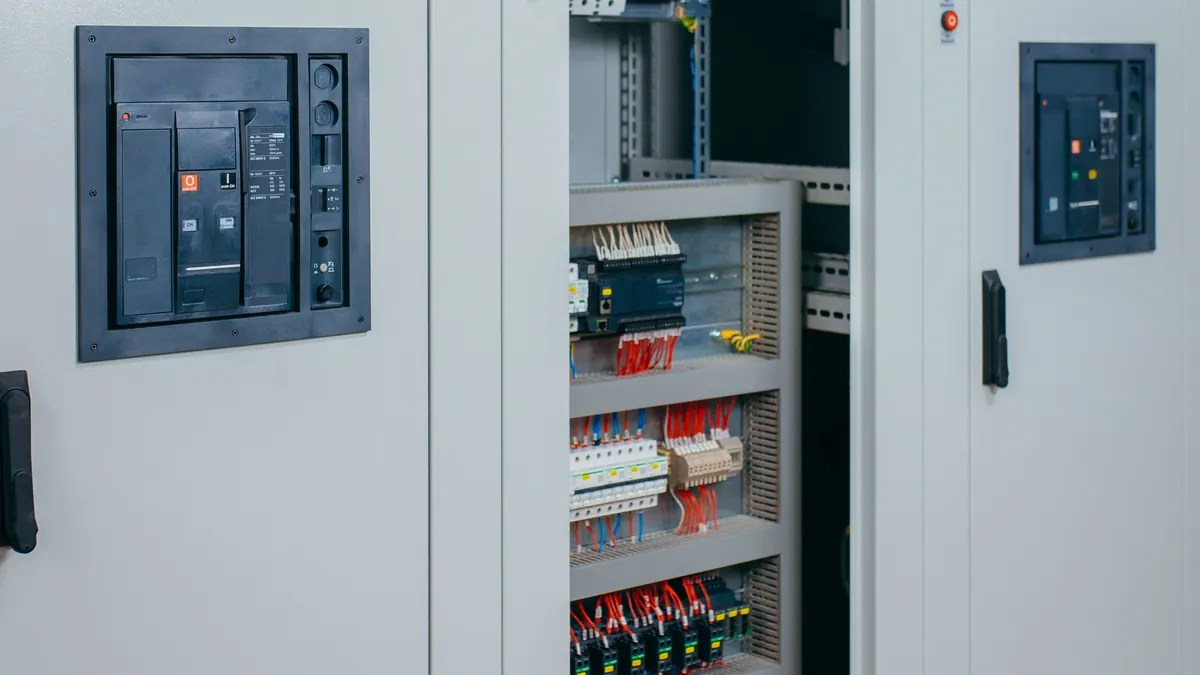
Through the site survey and protection coordination, which is where this is decided and where the most improvising happens. And through metering, because the dynamic response your generation must withstand in island mode comes from your real load curve, not from your consumption.
If what you need is continuity without islanding capability, we will tell you: storage for the transfer and fuel-based backup for the duration solve the problem at a fraction of the cost.
And when the project reaches capacities that require a generation permit, above 0.7 MW, development is handled by GIS Power, part of the same group. It pays to locate that boundary before designing, because it changes the filing and the schedule; it does not change that the project is done in-house.
Sources
Electricity Sector Law (Ley del Sector Eléctrico), DOF March 18, 2025 · Regulations of the Electricity Sector Law, DOF October 3, 2025. Articles 17, 19, 25, 30, 31, 32, 33 and 34.
The terms Private Grid, isolated self-supply and interconnected self-supply are concepts in the Law and are cited with their article. "Microgrid" is not a legal concept, so this article does not assign it a regime.
Private Grid is about who owns the network. Isolated or interconnected self-supply is about whether there is a cord to the grid. Microgrid is about whether you can drop it and keep operating. Three questions, three answers, and only the third is expensive.